

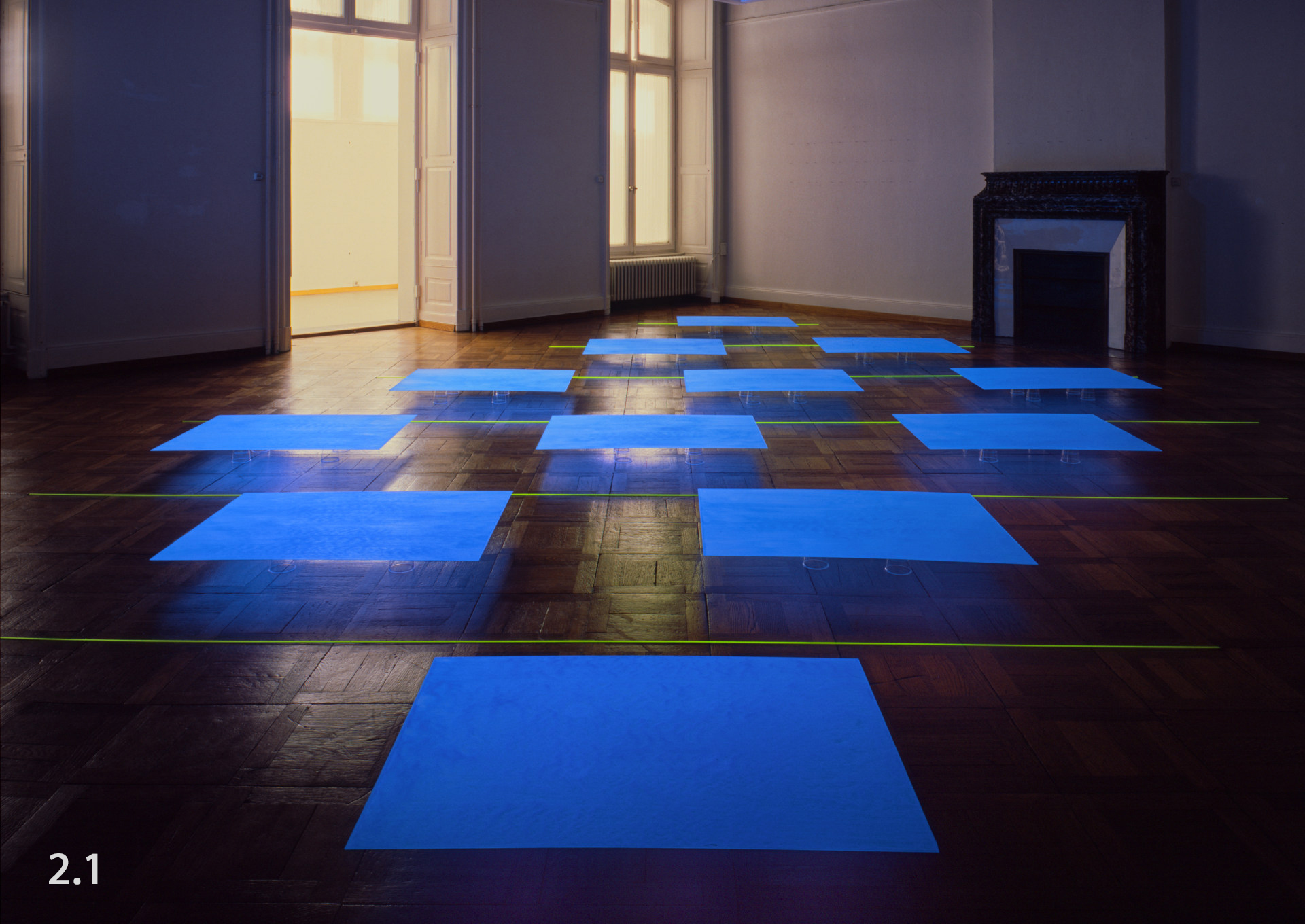
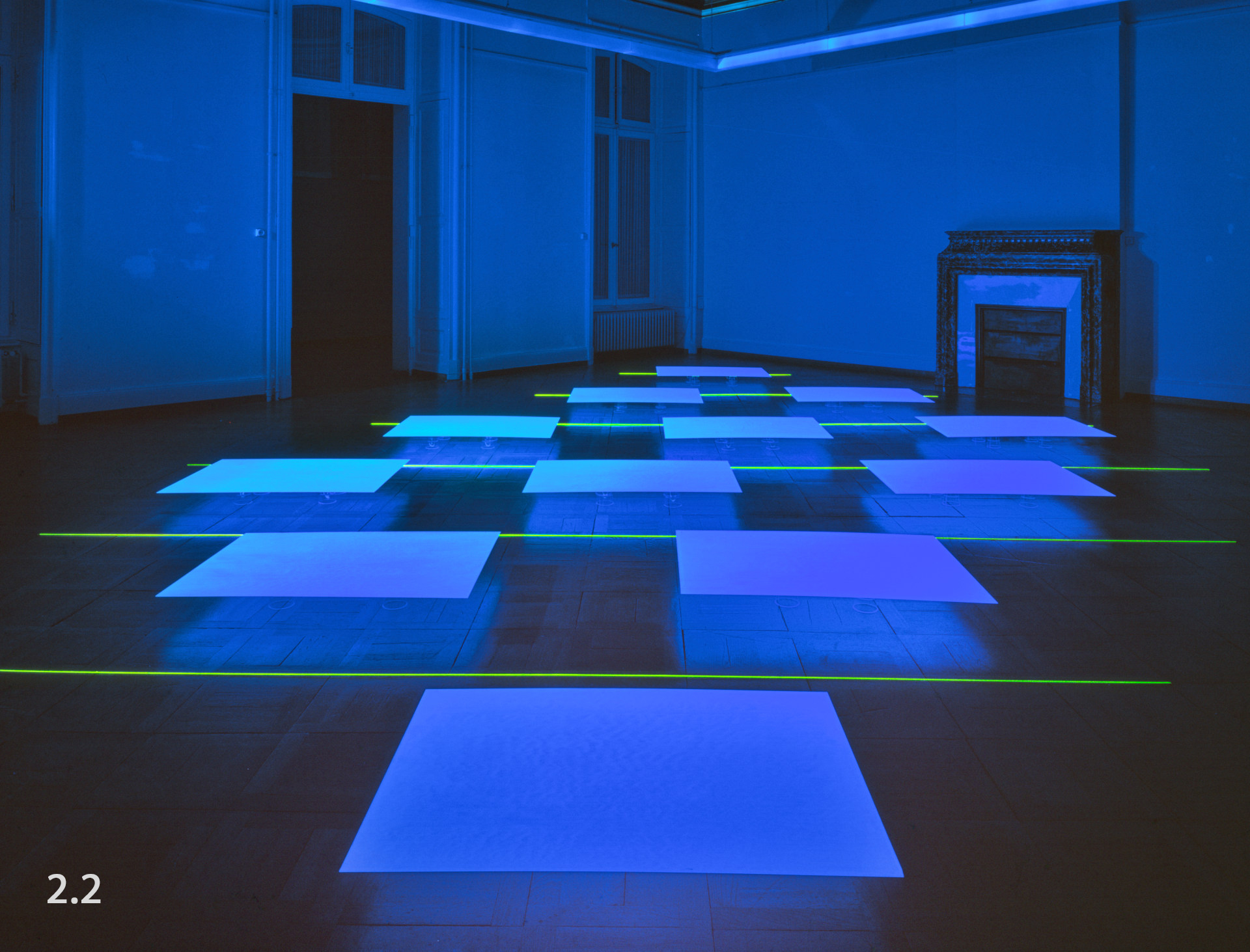
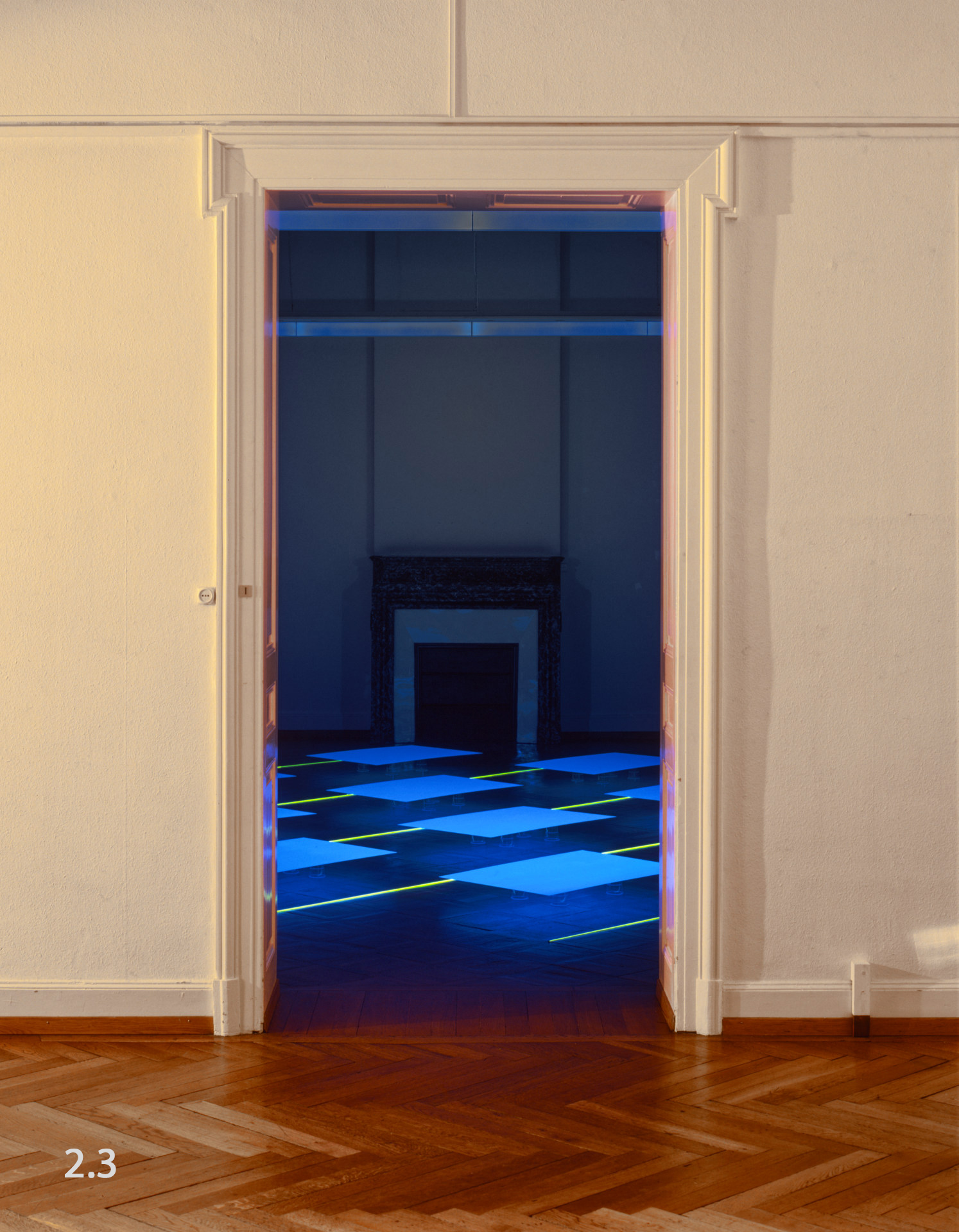
(Photos 2.1–2.3)
Blau Aqaurelle (Blue watercolour) – Thun, 1990
Colour field installation; floating glass painted with fluorescent paint, transparent glass bases, cord with fluorescent fibres, UV black light lamp
installation
Colour field light installations, 1989–1992
Installation view: Kunstmuseum Thun, 1990
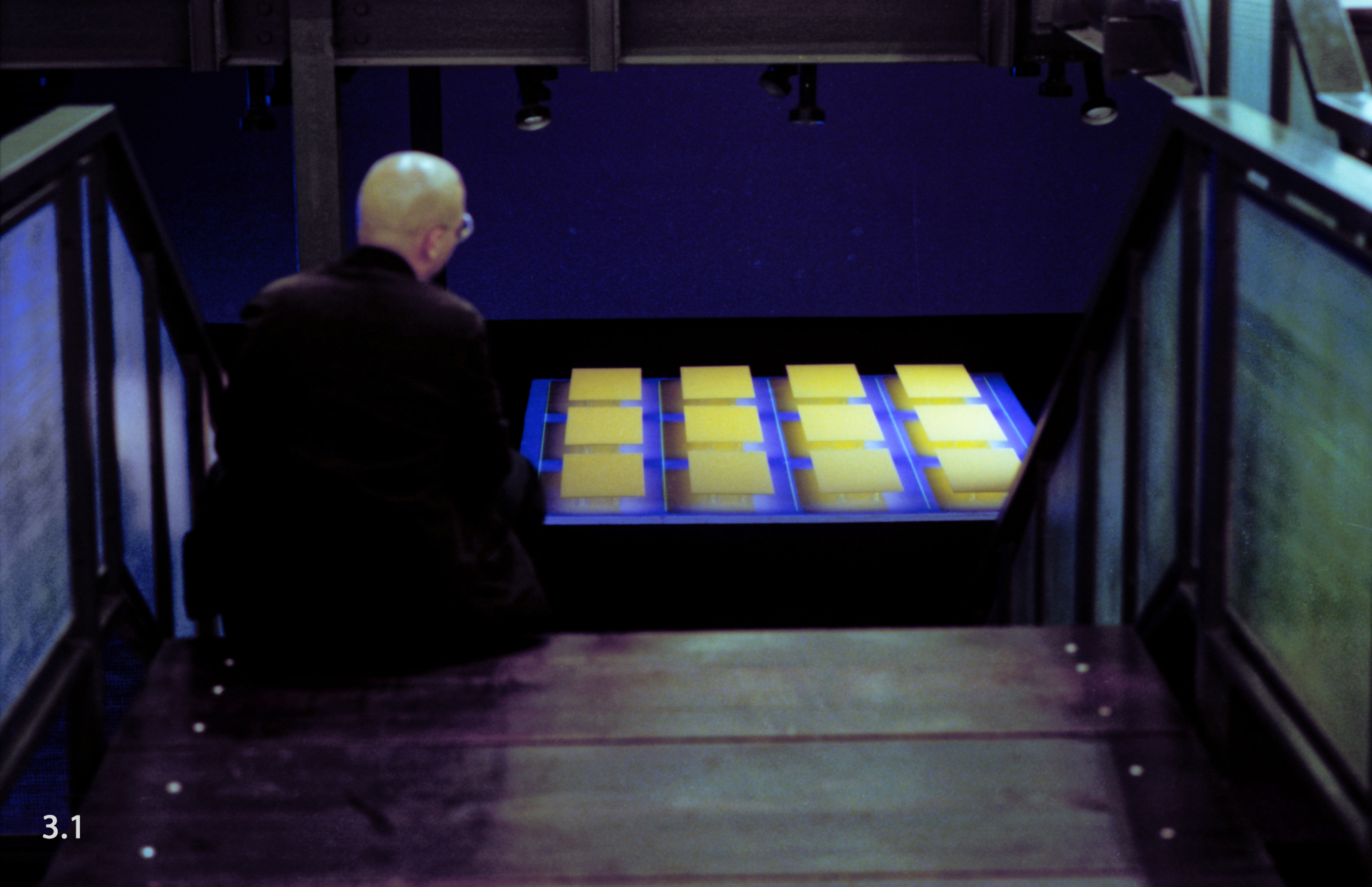
(Photos 3.1 und 3.2)
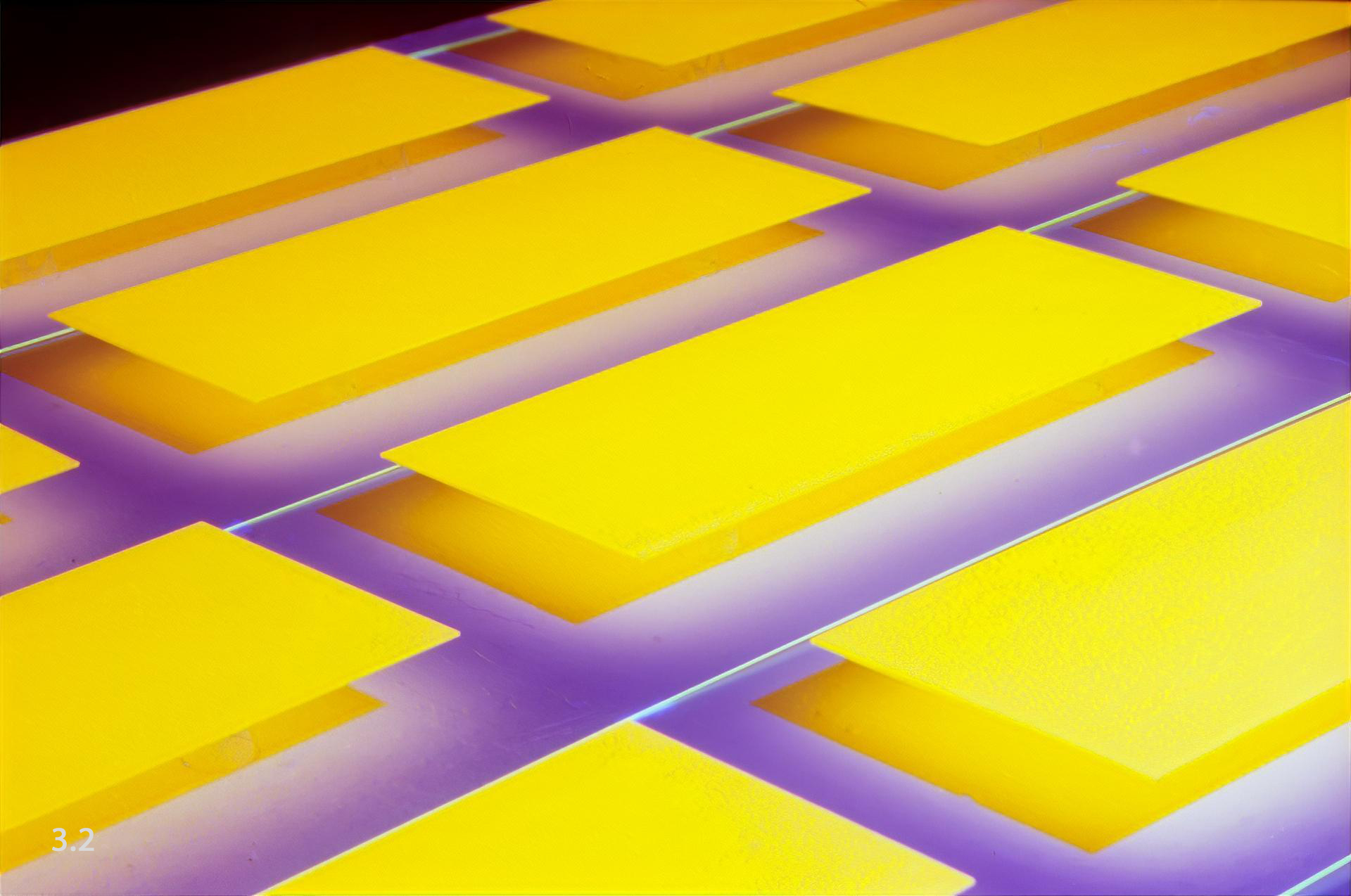
Farbfeld (Colour field) – Erfurt, 1991
Colour field installation; floating glass coated with fluorescent paint, transparent glass bases, cord with fluorescent fibres, white-painted base plate, UV black light lamp, approx. 420 x 350 cm
Installation view: Kunsthalle Erfurt, 1991
(Photo 4.1)
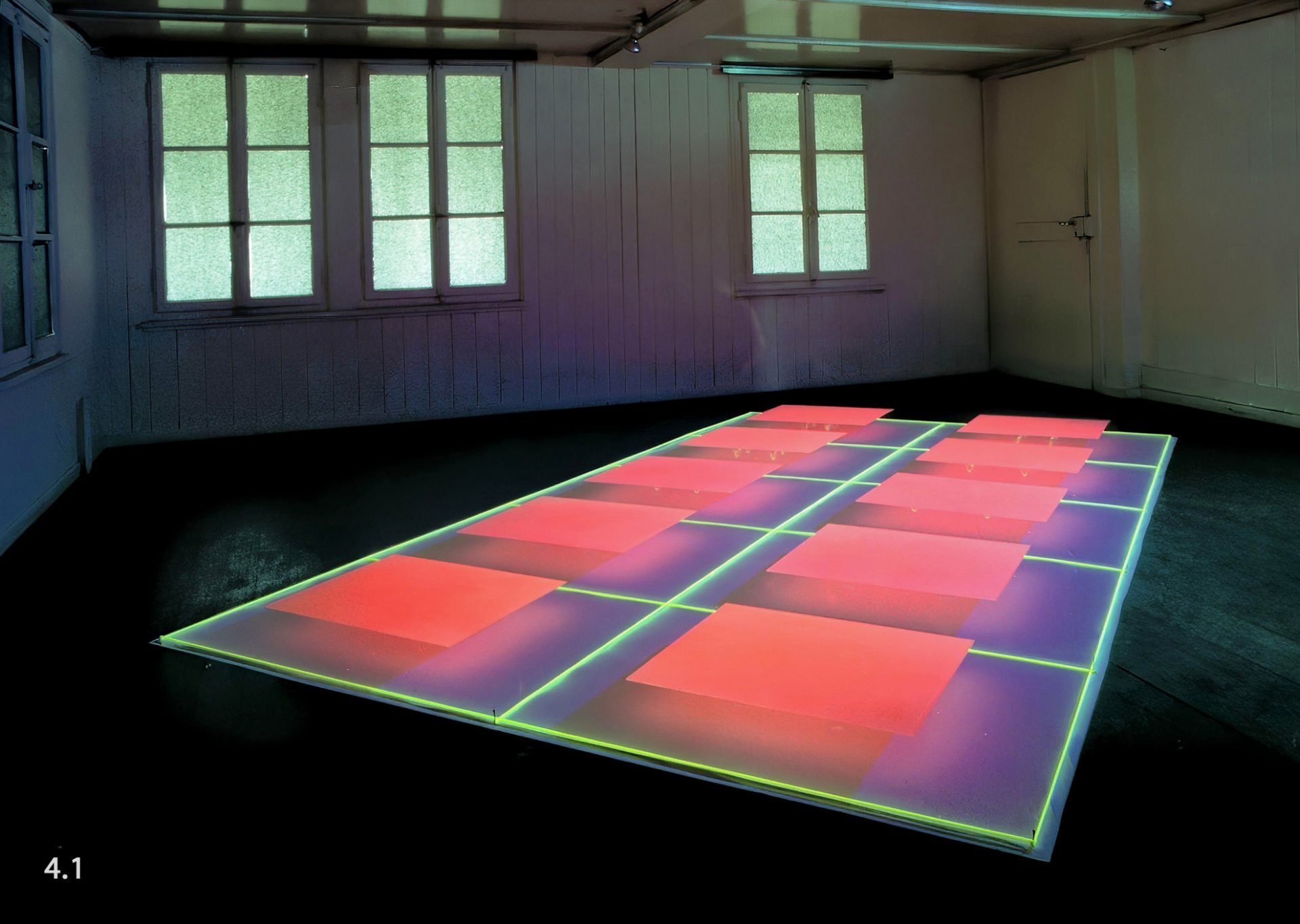
Farbfeld (Colour field) – Langenthal, 1990
Colour field installation; floating glass painted with fluorescent paint, transparent glass bases, cord with fluorescent fibres, white-painted base plate, UV black light lamp, 500 x 340 cm
Installation view: Galerie Chrämerhuus Langenthal, 1990
(Photo 5.1)
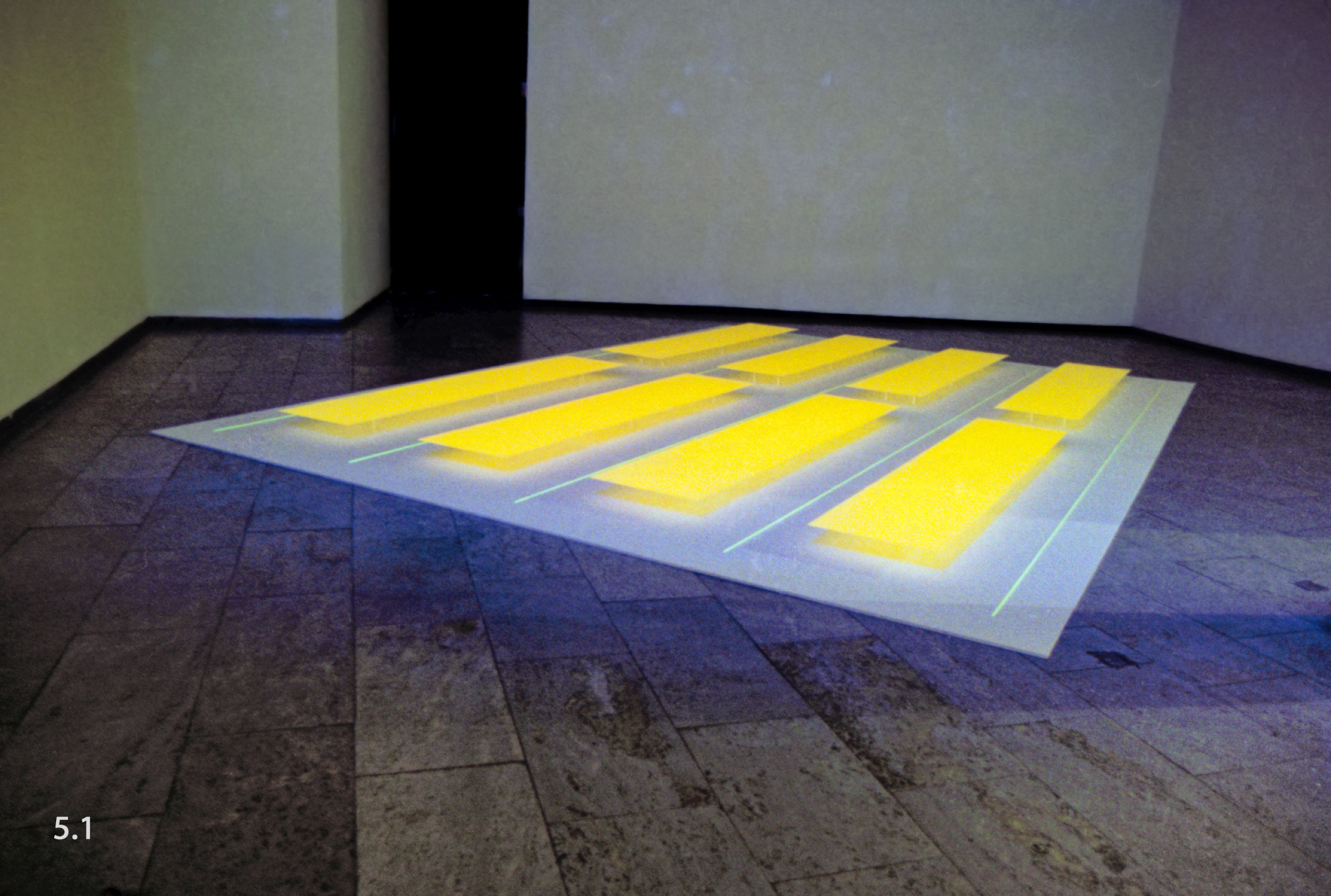
Farbfeld (Colour field) – Hamburg, 1991
Colour field installation; float glass painted with fluorescent paint, cord with fluorescent fibres, transparent glass bases, white-painted base plate, UV black light lamp, approx. 450 x 350 cm
Installation view: Kunstverein Hamburg, 1991
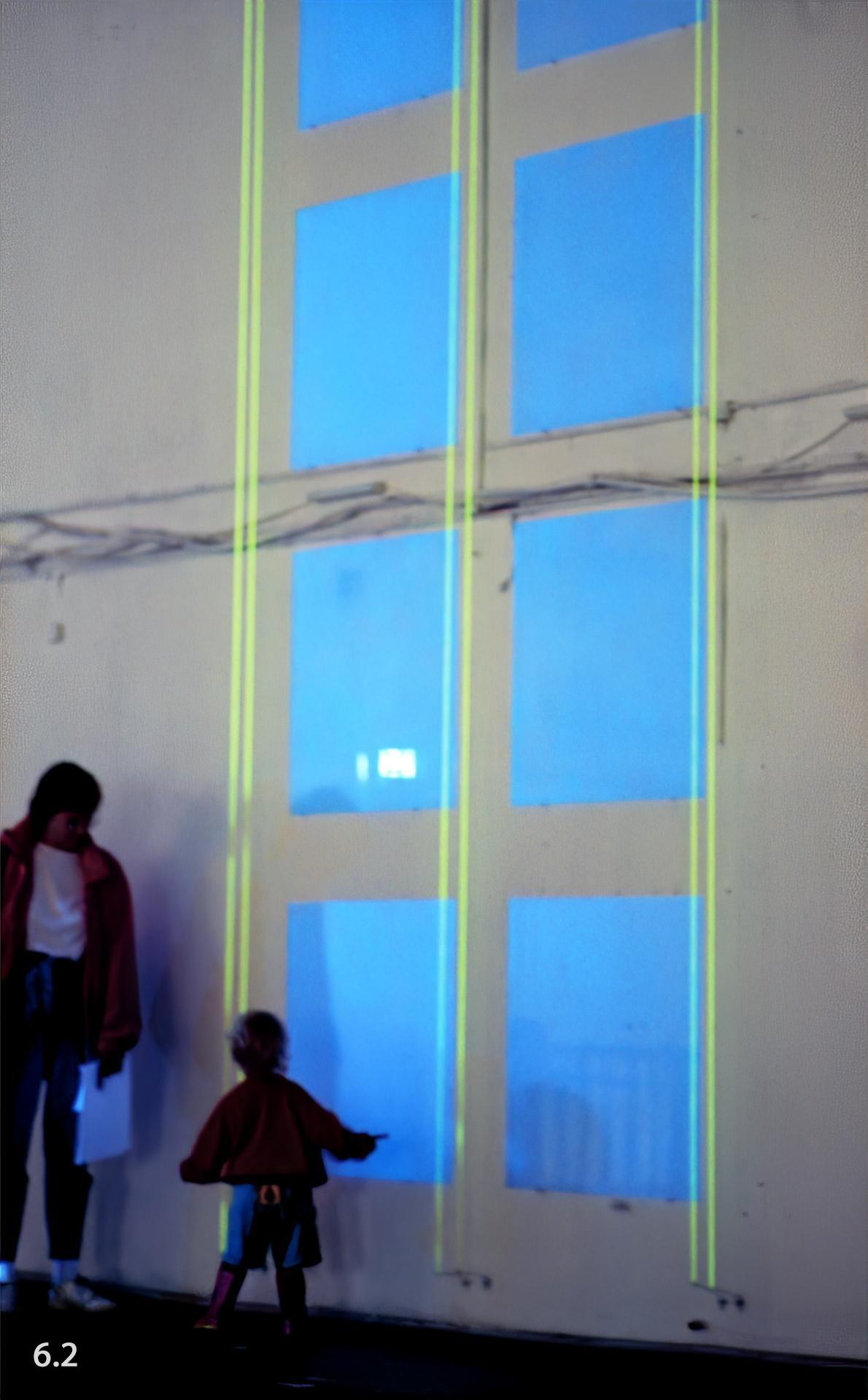
(Photos 6.1 und 6.2)
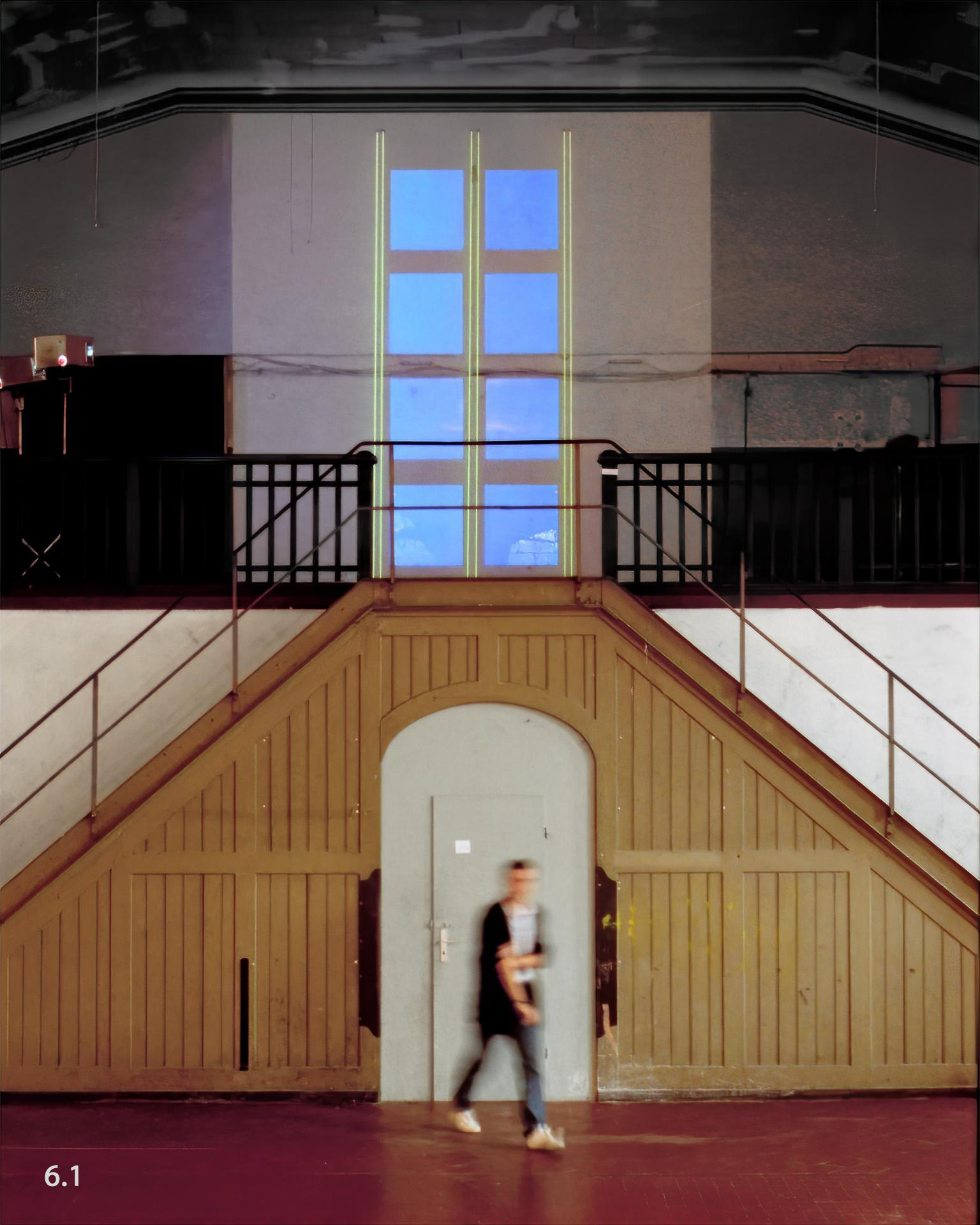
Auftakt (Opening Beat) – Bern, 1989
Colour field installation; float glass painted with fluorescent paint, cord with fluorescent fibres, transparent glass bases, UV black light lamp
Installation view: Dampfzentrale Bern, 1989
Daniel Hausig’s colour field light works are part of a tradition-forming line of colour field painting that has been significantly influenced since the 1950s by Mark Rothko, Barnett Newman and Clyfford Still, and in the European context by Gotthard Graubner, Raimund Girke and Ulrich Erben. During his studies with Graubner, Hausig became familiar with an approach to painting that understands colour as a physical and atmospheric phenomenon and is not bound to the materiality of pigment and canvas. On this basis, he further develops the concept of the colour field from the pictorial space and transfers it into a space-related, light-based practice.
The early colour field installations (1989–1992) mark a decisive step in this development: monochrome glass panels resting on transparent glass bases break away from the conventional image carrier structure and transform colour into a luminous, physical phenomenon. The fluorescent and phosphorescent pigments used react to UV light and create an immaterial colourfulness that oscillates between optical expansion and material presence. The almost invisible construction of the glass supports reinforces the impression of a floating colour surface and at the same time addresses the relationship between appearance and supporting structure.
Through the interplay of light, material and architectural setting, the exhibition space itself becomes a vehicle for the effect of colour. The installations define a colour space in which perception is experienced spatially, temporally and physically, raising new questions about the
media boundaries of painting.